|
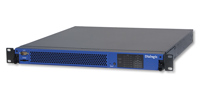
The Dialogic® BorderNet™ 2020 Integrated Multimedia Gateway (IMG) enables interworking between IP and PSTN networks via high-density optical, telephony, and Ethernet connections in a compact 1U form factor. The BorderNet 2020 IMG's enhanced Voice over IP (VoIP) density offers the potential for significant reductions in capital and operating expenses when compared to earlier generations of gateways.
Along with providing high density in a small footprint, the BorderNet 2020 IMG handles signaling and media in a single carrier-ready chassis, provides any-to-any voice network connectivity, and can deliver SIP services into SS7, SIGTRAN, PRI, and SIP-I networks. The 2020 IMG also features multimedia border element functions, such as SIP mediation and IP-to-IP transcoding for network-edge applications.
High Density and Versatility
With its high density and versatility, the BorderNet 2020 IMG can help wireless and wireline service providers add new Value-Added Services (VAS) quickly, and provide a clear migration path to an all-IP network. The 2020 IMG is also an excellent option for retail, wholesale, and enhanced service VoIP deployments, as well as contact centers and mobile VAS.
The BorderNet 2020 IMG also offers energy efficiency and hardware components where hazardous substances have been minimized, which can help operators and contact centers seeking to fulfill "green" initiatives.
Easy Management and Fast Maintenance
1U high-density design, element management system, and software licensing that allows in-service capacity expansion make the BorderNet 2020 IMG easy to manage and scale. Its NEBS-3 carrier-ready design uses independent network interfaces to separate transport, signaling, and OAM&P for reliability and enhanced service availability.
Fast maintenance features, such as hot-swappable power supplies, field-replaceable motherboard trays, and graceful upgrades address the flexibility and ease of operation that carriers need and increases reliability in the field.
The BorderNet 2020 IMG also features the Dialogic® Programmable Protocol Language (PPL), which allows rapid implementation of SS7 ISUP variants and other signaling changes.
| |
Features |
|
Benefits |
| |
Supports up to 2,016 channels of SS7 signaling, call routing, call translation, and IP transcoding in a single 1U chassis
|
|
Can significantly reduce capital and operating expenses
|
| |
|
|
|
| |
Simultaneous support for SS7 ISUP, SIGTRAN M3UA, and PRI signaling interworking with SIP and SIP-I
|
|
Provides a flexible, cost-effective platform that can evolve from a TDM-IP to an all-IP environment
|
| |
|
|
|
| |
Multimedia border element capabilities, including SIP mediation, topology hiding, and media transcoding
|
|
Facilitates efficient operations between incompatible network elements in a service provider infrastructure
|
| |
|
|
|
| |
Field replaceable components, such as power supplies, optical modules, and motherboard tray
|
|
Supports ease of operation and maintenance coupled with increased reliability
|
| |
|
|
|
| |
NEBS-3 carrier-ready design uses independent network interfaces to separate transport, signaling, and OAM&P |
|
Provides reliable throughput and enhanced service availability
|
| |
|
|
|
| |
Software license upgrades
|
|
Scales easily in-service as capacity requirements increase
|
| |
|
|
|
| |
Works with load balancers
|
|
Optimizes distribution of SIP traffic and improves scalability and fault tolerance |
| |
|
|
|
| |
Technical Specifications |
|
|
| |
Routing Features
|
|
-
Call routing and translation based on ANI, DNIS, Generic Number (only translation is supported), Nature of Address (NOA), Time of Day, and Day of Week/Year
-
Algorithms include percentage-based routing and disposition by Cause Code
-
Pre- and post-routing digit translations with wildcard support
-
Multiple routing algorithms per trunk group or groups of trunks for IP-to-TDM and IP-to-IP and both A-law and µ-law conversions
-
Pre-call announcement (branding)
|
| |
IP Bearer Features
|
|
-
Coder support: AMR, G.711, G.723.1, G.729 A/B, RFC 4040 Clear Channel
- Echo cancellation: G.168 128 ms tail length
- Voice activity detection
- Comfort noise generation
- T.38 real-time fax
- Fax/modem bypass
- Digit transmission via RFC 2833 (SIP)
- Symmetric NAT Traversal
|
| |
OAM&P |
|
-
Centralized Element Management System - GUI-based system allows monitoring and provisioning of up to 10 gateways
-
Centralized routing engine simultaneously configures gateways in the network
-
Radius (billing, authentication, prepaid)
-
Local time zone support and Network Time Protocol (NTP)
-
SNMP MIBs: MIB-2, Interface, Alarms, DS0, DS1, DS3, and OC3
|
| |
Power Requirements |
|
|
| |
AC Power Supply Range |
|
- 100 - 132 VAC (115 VAC nominal)
- 180 - 264 VAC (230 VAC nominal)
|
| |
DC Power Supply Range
|
|
-
-36 to -60 VDC (-48 VDC nominal)
|
| |
Environment
|
|
|
| |
Operating temperature range
|
|
- 0 to +50 °C, 95% relative humidity non-condensing
|
| |
Storage temperature range |
|
- -10 to +75 °C, 95% relative humidity non-condensing
|
| |
Physical Specifications |
|
|
| |
Dimensions |
|
- 1.72 in (43.7 mm) high
- 16.97 in (431 mm) wide
- 19.67 in (499.6 mm) deep
|
| |
Weight |
|
|
| |
Maintenance
|
|
|
| |
Field replaceable item |
|
- Fan filter (available in 10-packs)
- Power supplies
- OC-3/STM-1 optical module
- Motherboard tray
|
| |
Resiliency
|
|
- SS7 signaling: 1+1 active/standby redundancy
- Redundant Element Management System servers
- IP probing and redundancy failover (Ethernet links)
- Failover via automatic protection switching (optical links)
- Graceful software upgrade over multiple 2020 IMGs
- Graceful busy out per trunk group
- Virtual IP addresses for SIP load balancing (via third-party server)
- Call release due to media inactivity timeouts
- Dual, hot swappable, AC/DC power supplies
|
| |
Capacity
|
|
- 672 - 2016 TDM channels per 1U shelf with Rear I/O Type 2 (supports either Optical 0C3 interface or 3 DS3s)
- 672 - 2016 VoIP channels per 1U shelf; 1008 IP - IP sessions
|
| |
I/O Interfaces - Rear I/O Type - High Density |
|
|
| |
Telephony - T1 and E1, OC3/STM-1, and DS3 |
|
- 1 to 3 DS3 + 4 - T1/E1 for timing (BITS clock), signaling and bearer traffic
- 1 OC3/STM-1 with Automatic Protection Switching (APS) + 4 T1/E1 for timing (BITS clock),
- signaling, and bearer traffic (T1-100 ohms and E1-120 ohms)
|
| |
Clock Sync
|
|
- Stratum-3 via any T1/E1 interface or OC-3/STM-1 interface
|
| |
IP Interfaces |
|
|
| |
LAN IP |
|
- Dual redundant 100/1000 Base-T Ethernet for control; 2 - 100/1000 Base-T Ethernet Aux ports (reserved for later use)
|
| |
WAN IP |
|
- 4 - 100/1000 Base-T Ethernet for VoIP payload and signaling (additional 4 reserved for later use)
|
| |
Optical Transceiver |
|
- Hot plug LC connector type SFP modules (1310 nm 15 KM)
|
| |
TDM Signaling Protocols |
|
- ISDN PRI (FAS and NFAS): NI2, Euro ISDN, DMS 250, 5ESS, JATE/Japan INS-NET1500, ISDN Net 5
- Q.699 ISDN to SS7 mapping
- ISDN/SS7 UUI mapping to SIP
- SS7/C7 ISUP: ITU and ANSI variants supported through the Dialogic® Programmable Protocol Language (PPL)
- SS7 TCAP for message-waiting-indication and Caller Name (CNAM) service
- 64 SS7 links in standalone configuration and 128 SS7 links in redundant configuration (A-links and F-Links supported)
- E1 to DS3 mapping for third-party multiplexor compatibility
- ISDN call transfer and bridging via Explicit Call Transfer, Two B Channel Transfer, and Release Link Trunking (initiated via SIP REFER)
- Delayed ANM for ISUP (triggered by third-party SIP call transfers)
|
| |
IP Protocols
|
|
SIP and Related Specifications
- RFC 2246 Transport Layer Security (TLS) for SIP
- RFC 2327 Session Description Protocol (SDP)
- RFC 2976 SIP Info for digit transmission (#,*) and interworking DTMF
- RFC 3204 MIME Media Types for ISUP and QSIG (ISUP only supported)
- RFC 3261 SIP Basic
- RFC 3262 SIP PRACK
- RFC 3263 Locating SIP servers for DNS lookup SRV and A records
- RFC 3264 SDP Offer/Answer Model
- RFC 3265 SIP Subscribe/Notify
- RFC 3311 SIP Update
- RFC 3323 Privacy Header Field (partial support)
- RFC 3325 Asserted Identity
- RFC 3326 SIP Reason Header
- RFC 3372 SIP for Telephones (SIP-T)
- RFC 3398 ISUP/SIP Mapping
- RFC 3515 SIP REFER
- RFC 3578 ISUP Overlap Signaling to SIP
- RFC 3581 Symmetric Response Routing
- RFC 3666 SIP to PSTN Call Flows
- RFC 3725 Third Party Call Control for SIP
- RFC 3764 ENUM for SIP Address of Record
- RFC 3891 SIP Replaces Header
- RFC 3892 SIP Referred-By Mechanism
- RFC 4028 SIP Session Timer
- RFC 4244 SIP History info (for call diversion)
- RFC 4412 Communications Resource Priority for SIP (partial support)
- RFC 4568 SDP Security Descriptions for Media Streams
•RFC 4904 SIP tgrp (trunk group) parameter
- SIP 3xx Gateway Responses and 302 Initiate
- SIP Diversion Header
- SIP Trunk Group IDs (OTG, DTG)
- SIP Coder Negotiation
- SIP Busy Out
- SIP P-Charge-Info Header
- ITU-T Q.1912.5 - IP and ISUP interworking (includes SIP-I) and overlap signaling (SIP-to-SIP ISUP)
- SIP Mediation (SIP-to-SIP)
- SIP to SIP-I/SIP-T
SIGTRAN
- RFC 3332 - M3UA Adaption Layer
- M3UA Application Server
- M3UA Signaling Gateway for TCAP/SCCP
|
| |
QoS
|
|
- Adaptive jitter buffer
- Packet loss compensation
- Configurable Type of Service (ToS) fields for packet prioritization and routing
|
| |
|
|
|
*
All document will in Portable Document Format (PDF).
For Enquiry, please contact: sales@icg-corp.com
|
|
|